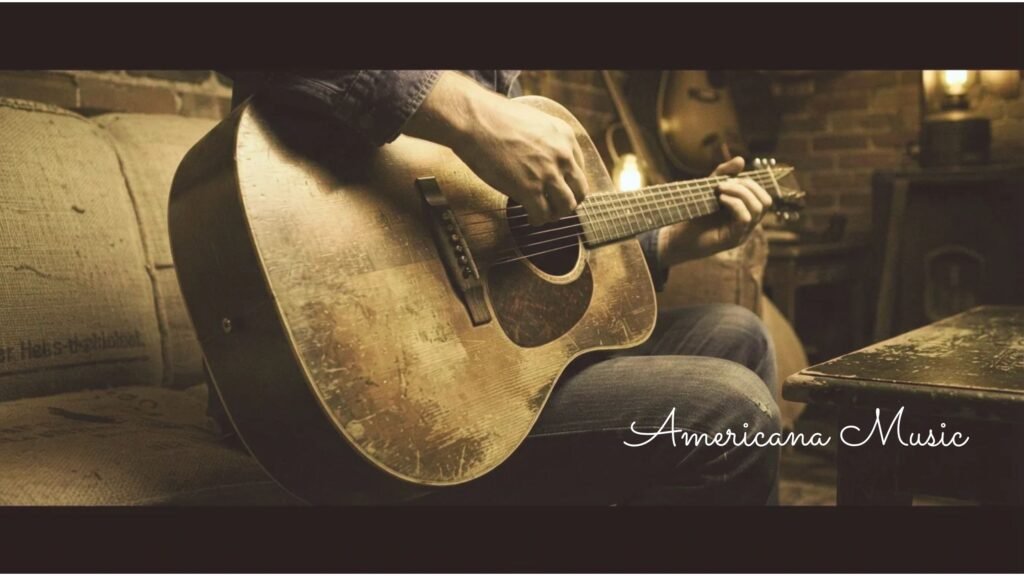
Why Americana Feels Like Home
The Many Ways It Lives in My Writing
I did not choose Americana because it offered me a convenient label. I chose it, or perhaps recognized myself inside it, because it made room for all the musical languages that had already become part of me.
Country taught me to respect a plainspoken story. Blues gave me permission to tell the truth without cleaning up every hard edge. Folk showed me that ordinary lives are worth documenting. Gospel taught me harmony, conviction, and hope that has survived something. Southern rock and soul brought muscle, movement, and heat.
Americana lets those influences sit at the same table.
My attachment to the genre is personal because my authentic Americana sound did not begin with a marketing decision. It grew from Oklahoma, family history, church music, country living, hard seasons, second chances, and more than twenty years of writing songs. Americana feels like home because it sounds like the way I remember, question, survive, and make meaning.
I Write From Lived Experience
The center of my writing is simple: I could not write these songs if I had not lived them first.
That does not mean every song is a literal account of one event. Songwriting allows memories to be the inspiration. A scene can be condensed. A character can hold pieces of several people. A private detail can be protected. But the emotional truth has to come from somewhere real.
I have written through single motherhood, love, illness, miscarriage, financial pressure, fear, resilience, faith, grief, and the long work of becoming myself again. Some experiences entered songs immediately. Others needed years before I understood them.
Americana gives me room to let those stories unfold without forcing them into a shiny conclusion. It respects the unresolved moment. It understands that a person can be grateful and grieving, strong and tired, hopeful and uncertain at the same time.
That emotional complexity is the foundation of the songs with emotional honesty I want to leave behind.
I Use Story as the Doorway
I rarely begin with a message I want to teach. I begin with a person, a memory, an object, a line of conversation, or a moment that refuses to leave me.
A father working beside an old car. A woman realizing she has survived more than she once believed she could. A baseball field carrying the tension between failure and possibility. A house, a road, a hospital room, or a familiar Oklahoma sky.
These details create a doorway. Once the listener can see the place, she can enter the emotion without being told what to feel.
I do not want to hand the listener a conclusion. I want to tell the story truthfully enough that she can find herself inside it.
This is one of the qualities I value most in storytelling in music. A well-told story can be deeply personal without becoming closed. The more specific the scene becomes, the more recognizable the human feeling often is.
I Let the Genres Speak to One Another
My writing does not always arrive wearing the same clothes. One song may lean toward blues. Another may feel like folk or country. Another may need the weight of rock, the movement of soul, or the lift of gospel harmony.
I have stopped asking every song to prove it belongs in one box. Instead, I listen for what the song itself needs.
- Country often appears in my narrative structure, plain language, and sense of place.
- Blues lives in the tension, repetition, emotional grit, and willingness to stay with discomfort.
- Folk influences the way I document family, memory, ordinary work, and lived history.
- Gospel shapes my harmonies, emotional rise, testimony, and belief that pain is not the entire story.
- Soul informs my phrasing, groove, and the physical feeling I want the vocal to carry.
- Rock gives certain songs the force to push rather than simply reflect.
Americana is the ground beneath those conversations. It does not require every influence to appear in equal measure. It allows the song to reveal its own balance.
I Write for the Lower Part of the Song
Bass is my favorite instrument, with harmonica following close behind. That preference affects the way I hear songs before an arrangement is finished.
I often imagine the emotional movement from the bottom up. The bass is not an accessory added after the important decisions have been made. It can create confidence, tension, sensuality, humor, or momentum. It can tell the body what the lyric has not yet explained.
Harmonica brings another kind of language. It can sound playful, lonely, unruly, weathered, or conversational. In a song such as “Hit Or Miss,” those instruments help create personality as much as the words do.
This is one way my Americana identity moves beyond lyrical subject matter. It shapes rhythm, instrumentation, space, and texture. The story is carried by the entire recording.
I Leave Room for the Human Voice
I am drawn to performances that sound inhabited. I want to hear a person making a choice inside the line.
My voice is an earthy alto, and I have learned not to treat its texture as something that needs to be corrected. Breath, grain, restraint, and force can all tell the truth. The strongest performance is not always the largest one. Sometimes the line needs to rise. Sometimes it needs to remain close enough to feel like one person speaking to another.
My years singing gospel harmony taught me to listen for the relationship between voices. My years writing alone taught me to listen for the relationship between silence and language. Both matter.
An Americana vocal can carry strength without pretending invulnerability. That matters to me because many of my songs live in the space between being wounded and being defeated. Those are not the same thing.
I Write From Oklahoma
Place is part of my writing even when I do not specifically name it.
Oklahoma has its own mixture of beauty, severity, humor, faith, weather, red dirt, stubbornness, and wide-open spaces. It teaches a person that conditions can change fast. It also teaches endurance.
The people and landscapes around me have shaped what I notice. I pay attention to work-worn hands, family sayings, old roads, storm light, porches, fields, and the stories people tell when they finally trust someone enough to tell the truth.
That sense of place is one reason being an Americana singer-songwriter feels natural to me. I am not borrowing a rural image or assembling a costume. I am writing from the life and language that raised me.
I Allow Hope to Be Earned
Hope appears often in my writing, but I do not want it pasted onto the final chorus because a song is expected to end well.
The hope has to survive the verse.
In gospel, hope can rise through struggle. In blues, the act of naming pain can become a form of survival. In country and folk, a person may reach wisdom only after the consequences have been faced. These traditions taught me that encouragement is most believable when it acknowledges the cost.
That is why I return to songs about second chances. I believe people can begin again, but beginning again does not require pretending the first chapter never happened. The scar and the healing can belong to the same story.
I Write With Legacy in Mind
I do not have a multimillion-dollar estate to pass down. What I have is something different. History. Wisdom. Stories. Songs. Art.
That understanding has changed the way I measure creative work. A song is not only a product released into a crowded market. It is evidence that a person was here, paid attention, loved people, survived things, and made meaning from what she was given.
This is not just business. This is legacy.
Albums such as Right Where I Belong matter to me because they preserve more than a season of music. They hold decisions about identity. They record the moment I stopped asking whether my varied influences were too difficult to classify and began trusting that their relationship was the point.
Americana Gives Me Room to Be Whole
I have resisted being reduced to one box for most of my creative life. I am an artist first. I write songs that may lean toward country, blues, folk, gospel, soul, or rock because I have been shaped by all of them.
Americana does not solve the industry’s appetite for simple labels. What it offers me is more valuable. It provides a tradition broad enough to hold contradiction, history, regional identity, musical conversation, and a story told in a human voice.
My attachment to Americana is ultimately an attachment to truth with roots. It is the belief that where we came from matters, what we endured matters, and the way we tell it matters.
I express it through story, harmony, rhythm, instruments, vocal texture, spiritual memory, Oklahoma soil, and hope that has earned its place. None of those elements stands alone. Together, they sound like me.
That is why Americana feels like home. It does not ask me to leave any honest part of myself outside the door.

Want More Than The Article?
Explore the music, stories and releases behind Misti Flowers.
Contact: mistiflowersmusic@gmail.com
© 2026 Misti Flowers Music