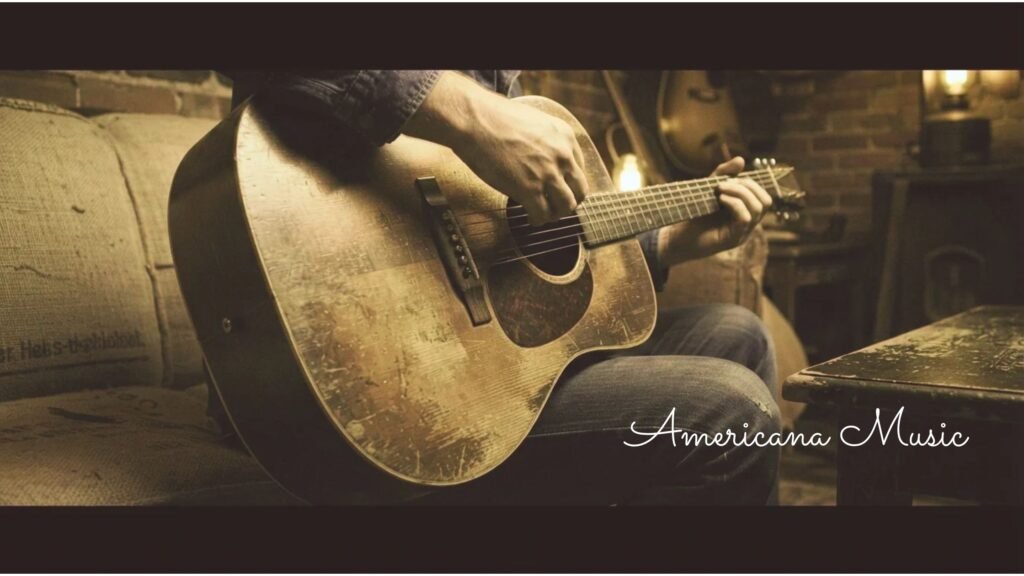
The Americana Singer-Songwriter: Weaving Stories into Sound
When someone asks what I do, the simplest answer is that I am an Americana singer-songwriter. It is accurate, but it is also incomplete. Those three words describe a genre and a role, yet they do not explain the years of living that happen before a song is written, the quiet work of finding the right language, or the responsibility of singing something that came from a real place.
For me, songwriting has never begun with a marketing category. It begins with something I cannot quite leave alone. A memory keeps returning. A phrase follows me through the day. A truth I have avoided finally becomes too loud to ignore. Eventually, that feeling finds a melody, and the melody gives it somewhere to live.
More Than a Genre Label
An Americana singer-songwriter often works at the meeting place of several American roots traditions. Country contributes plainspoken storytelling and a sense of place. Blues makes room for sorrow, tension, and survival. Folk carries memory and witness. Gospel reaches toward hope, faith, and something larger than the individual voice.
The Americana Music Association describes the genre broadly enough to hold all of those influences. That openness matters to me. I have never wanted to choose only one thread from my musical life. I have sung country, gospel, worship, blues, and acoustic music. Each tradition taught me something different about how a song can tell the truth.
As I explored in what Americana music means, the genre is held together less by one required sound than by a shared intention. The song should feel rooted. It should sound as if it came from somewhere, from someone, and from a life that left fingerprints on it.
An Americana song does not need to explain everything. It needs to make us believe that something real happened.
The Story Begins Before the Song
I could not have written many of my songs when I was younger. I may have had the voice and the desire, but I did not yet have the perspective. Some truths need time before they can be spoken without pretending.
“Right Where I Belong” grew from the reflective recognition that the life I once might have considered too small was actually the life that fit me. Morning coffee, Oklahoma wind, wildlife, red earth, and a porch swing were not decorative details added to make the song sound rural. They were the landscape of a realization. I had spent years overwhelmed with responsibility, disappointment, change, and survival before I understood what home and belonging felt like.
“My Life” came from a different kind of reckoning. I reached a point where I understood that no one else could live my life for me. Other people could have opinions about my age, my choices, or whether returning to music made practical sense, but they would not be the ones looking back on the life I had either lived fully or allowed to pass.
The song came after the lesson. That order matters.
Specific Details Make a Story Believable
A songwriter can say, “I was heartbroken,” and the listener will understand the idea. But a story becomes more powerful when it gives the listener something they can see, hear, or relate to. The empty chair. The porch light left on. The coffee growing cold because a conversation lasted longer than expected.
Specificity does not make a song less universal. It gives the listener a doorway. We may not have stood in the same kitchen or driven the same Oklahoma road, but most of us know what it means to wait, to leave, to return, or to realize too late what a moment meant.
When I shape a storytelling song, I listen for several things:
- A clear emotional center
- Details that belong to this particular story
- A turn that changes what the listener understands
- Language that sounds natural when sung aloud
- Enough space for the listener to bring in their own life
Craft matters because honesty alone does not automatically create a strong song. A real experience still needs structure, rhythm, restraint, and revision. The goal is not to report every fact. The goal is to find the details that carry the emotional weight.
Writing and Singing Are Part of the Same Conversation
For a singer-songwriter, the writing does not end when the lyric is finished. The voice becomes part of the story.
A word can change meaning depending on whether it is whispered, held, cracked, pushed, or allowed to fall away. A breath before a line can reveal hesitation. A rough edge can communicate more than a technically perfect phrase. The performance tells the listener how close the memory still is.
This does not mean every vocal must sound wounded or unpolished. It means the singer has to understand why the line exists. When I sing my own work, I am not trying to act like the person who lived the story. I am returning to the emotional truth of the moment and carrying it forward with the perspective I have now.
Independent Work Requires Patience
The independent singer-songwriter journey includes far more than writing and recording. There are mixes to review, credits to verify, artwork to create, rights to protect, pages to build, and release plans to manage. Sometimes the business surrounding a song seems determined to become louder than the song itself.
That is one reason I keep returning to intention. A song needs time to become what it is supposed to be. Working independently allows me to make decisions based on the work rather than a demand to fit a narrow commercial lane. It also requires patience, problem-solving, and the willingness to keep learning.
My discography reflects more than a collection of releases. It traces changes in my voice, my priorities, and my understanding of what I want music to hold. The work is not separated from the life around it. It grows alongside it.
The Listener Completes the Story
Once a song is released, it no longer belongs only to the moment that inspired it. A listener hears it through the filter of their own memories.
That is one of the mysteries I love most about songwriting. I may write about one specific relationship, season, or choice, and someone else may hear their own story inside it. The facts can be different while the emotional truth remains familiar.
The strongest connection does not come from telling listeners what to feel. It comes from making the story honest enough that they recognize something of themselves without being instructed.
What the Work Leaves Behind
I think more about legacy now than I did when I first began singing. Not legacy as fame, status, or a perfectly polished account of a career. I mean the record left by a person who paid attention to her own life and turned what she learned into something another person might carry.
Songs preserve voices. They keep ordinary places from disappearing. They hold family sayings, difficult seasons, private victories, and the particular way someone understood the world. Years after a moment has passed, a song can still bring its emotional weather back into the room.
That is what being an Americana singer-songwriter means to me. It is the work of listening closely, living honestly, and shaping experience into sound without sanding away everything that made it human.
The melody matters. The performance matters. The production matters. But underneath all of it is a story that needed somewhere to go.

Want More Than The Article?
Explore the music, stories and releases behind Misti Flowers.
Contact: mistiflowersmusic@gmail.com
© 2026 Misti Flowers Music